Jonathan Buttry Jonathan Buttry

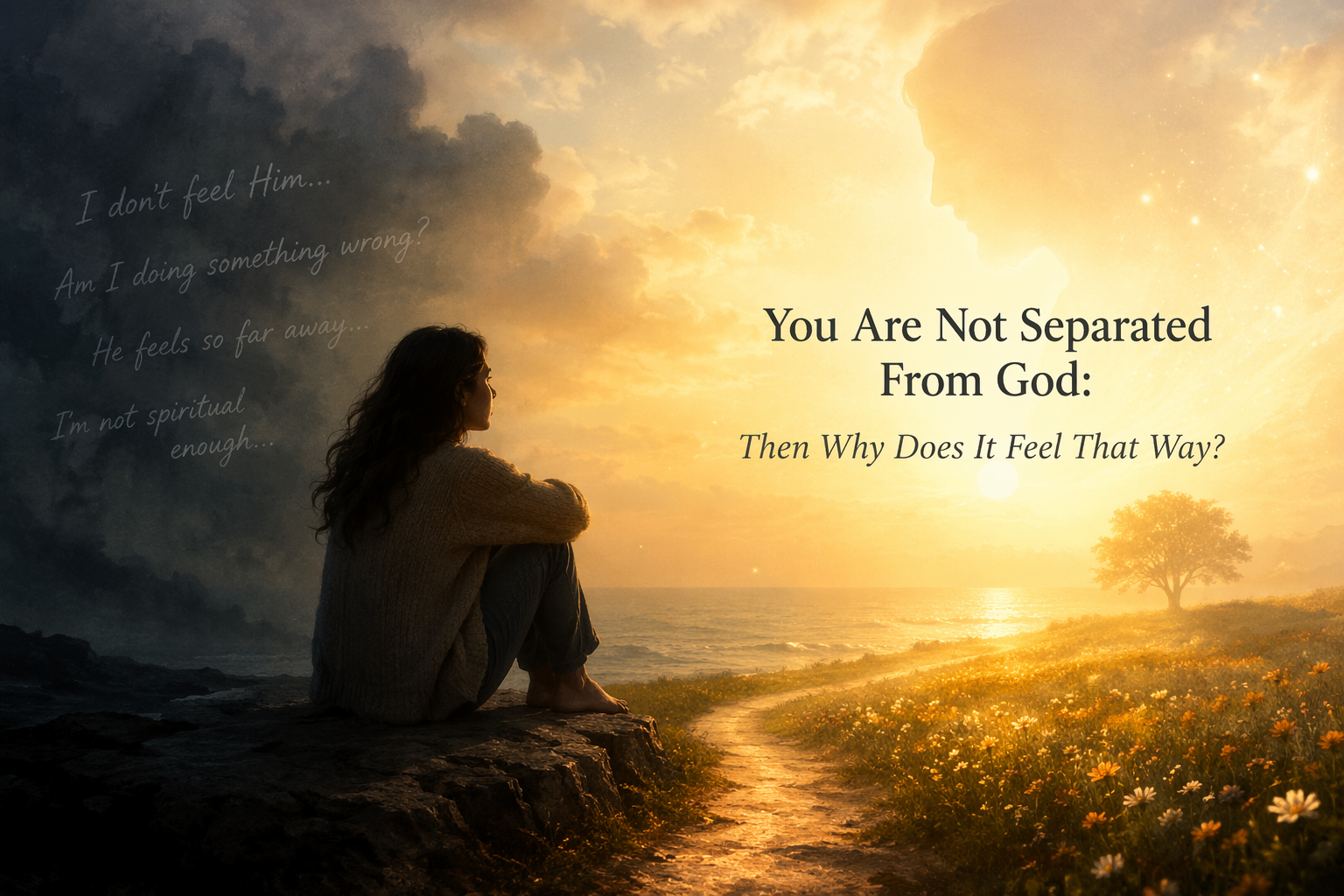
You Are Not Separated From God: Then Why Does It Feel That Way?

It All Begins Here

There are few ideas more deeply embedded in the human psyche than the belief that we are somehow separated from God. For many, this assumption is not merely theological—it is emotional, embodied, and reinforced through years of teaching, experience, and interpretation. It feels real because, in many ways, it is real. But the question we must ask is this: Is it ultimate?

The Primitive Baptist Universalist tradition answers that question with a careful distinction. The experience of separation is real, but it is not ontological—it is not the actual state of our being. Rather, it is a learned and interpreted experience, shaped by culture, religious systems, fear, and the ways we have been taught to understand ourselves in relation to God.

From a theological perspective, if God is the sustaining ground of all existence, then there is no place where God is not. The apostle Paul, speaking in Acts 17, describes humanity as living and moving and having our being in God. This is not poetic exaggeration—it is a metaphysical claim. If it is true, then separation cannot be literal distance. It must be something else.

From a psychological perspective, this begins to make sense. Human beings do not experience reality directly—we experience it through interpretation. Our nervous systems, our early experiences, and the narratives we inherit all shape what feels true. If a person is taught from an early age that God withdraws, judges, and distances Himself, then their internal world will reflect that belief. The body will register fear. The mind will construct meaning around it. And the experience of separation will feel undeniable.

But feeling is not the same as ultimate reality.

This is where theology and psychology converge. What we call “separation from God” is often better understood as alienation within consciousness—a dissonance between what is true and what is perceived. The work of Christ, in this framework, is not to make God present, but to reveal that God has never been absent.

This reframes judgment entirely. Judgment is not God pushing humanity away, but the process through which illusion is exposed. It is the moment when what we have believed to be true is brought into contact with what is true. That process can feel destabilizing. It can feel like loss. But it is ultimately restorative.

For those who have experienced religious trauma, this distinction matters deeply. The fear of separation is often reinforced through systems that rely on control—fear, obligation, and guilt. These systems shape not only belief, but identity. To question them can feel like stepping into uncertainty. But it may also be the beginning of clarity.

The goal is not to dismiss the experience of separation, but to understand it properly. When we do, we are no longer trapped by it. We can begin to ask different questions:

  • What have I been taught to believe about God?

  • How has that shaped what I feel?

  • What if my experience is not the final authority on reality?

The Primitive Baptist Universalist tradition offers a simple but profound claim: You are not separated from God. What you experience is real—but it is not ultimate.

And if that is true, then the journey of faith is not about getting back to God, but about waking up to the presence in which you have always existed.

Read More
Jonathan Buttry Jonathan Buttry

If Everyone Is Saved, Why Should We Live Responsibly?

It All Begins Here

One of the most common critiques of universalism is straightforward: If everyone is ultimately reconciled to God, what reason is there to live responsibly? If there is no threat of eternal punishment, does anything really matter?

At first glance, this seems like a serious problem. But the question itself reveals an assumption that deserves examination—that fear is the primary motivator for moral behavior.

The Primitive Baptist Universalist tradition challenges that assumption at its root.

If ethical life depends on the threat of punishment, then morality is not truly internalized—it is externally enforced. It becomes a system of compliance rather than transformation. A person may behave correctly, but not because they have grown, understood, or integrated truth. They behave because they are afraid.

This is what the apostle Paul describes as a kind of spiritual immaturity. In 1 Corinthians 13, he writes, “When I was a child, I spoke as a child… but when I became a man, I put away childish things.” A fear-based moral system may be necessary at early stages of development, but it is not the end goal. It is a beginning, not a completion.

From a psychological standpoint, this aligns with what we know about human development. External control can shape behavior, but it cannot produce deep transformation. Real change occurs when individuals begin to understand the consequences of their actions, not just externally, but internally—how those actions affect themselves, others, and the world around them.

Within a universalist framework, responsibility is not removed—it is intensified.

Why? Because the illusion of escape is gone.

If one believes that consequences can be avoided through external means—repentance formulas, institutional affiliation, or future reward—then responsibility can be deferred. But if we understand that we are always living within the reality of God’s presence, then our actions matter now. They shape our experience, our relationships, and our internal world in real time.

This reframes ethics entirely.

  • Sin is no longer primarily about breaking rules—it is about living out of alignment with reality.

  • Consequences are not imposed from the outside—they are experienced from within.

  • Growth is not driven by fear—it is driven by awareness.

Freedom, in this sense, is not the absence of responsibility. It is the condition that makes responsibility meaningful.

This is what we might call a Christian libertarian ethic—not libertarian in the sense of individualism without concern for others, but in the sense that moral life is not coerced. It arises from within. It is chosen, not forced.

For many, this is unsettling. Fear provides a kind of clarity. It tells us exactly what to do and what to avoid. But it also limits growth. It keeps individuals in a reactive state rather than a reflective one.

The removal of fear does not eliminate morality—it exposes whether morality has truly taken root.

If we are not motivated by the threat of punishment, then we must ask deeper questions:

  • What kind of person am I becoming?

  • How do my actions affect others?

  • What does it mean to live truthfully?

These are more difficult questions, but they are also more meaningful.

The Primitive Baptist Universalist tradition does not argue that nothing matters. It argues that everything matters more than we thought—not because of what might happen later, but because of what is happening now.

Responsibility, then, is not a burden imposed from the outside. It is the natural expression of a life that is becoming aware, integrated, and aligned with reality.

Read More
Jonathan Buttry Jonathan Buttry

Heaven Is Not a Place: A Biblical and Theological Case

It All Begins Here

For many Christians, heaven is understood primarily as a destination—a place where believers go after death. It is often described in spatial terms: above, beyond, or outside the present world. This framework is deeply ingrained, but it raises an important question: Is this how the Bible actually presents heaven?

The Primitive Baptist Universalist tradition suggests otherwise.

When we examine the language of Scripture, particularly in the teachings of Jesus, we find that “heaven” is not consistently described as a future location. Instead, it is often presented as a present reality—something that can be entered, experienced, and even recognized within the current moment.

Consider Jesus’ frequent use of the phrase “the kingdom of heaven.” In many passages, this kingdom is not deferred to the afterlife. It is described as “at hand,” “within,” or “among you.” These are not spatial descriptions of a distant place—they are relational and experiential descriptions of a present reality.

This shift is significant.

If heaven is not primarily about where we go, but about the reality in which we participate, then the focus of faith changes. It is no longer centered on escape from the world, but on perception within it.

From a theological perspective, this aligns with a deeper understanding of God’s nature. If God is the sustaining ground of all existence, then heaven cannot be a place where God is more present than elsewhere. God is not confined to a location. Therefore, heaven must be understood as something other than geography.

It is, instead, a way of experiencing reality in alignment with God.

This does not mean that all experiences are identical. Clearly, they are not. Human beings experience life in vastly different ways—some marked by peace, others by anxiety, alienation, or suffering. But these differences do not necessarily reflect changes in God’s presence. They reflect differences in awareness, interpretation, and integration.

This is where the concept of heaven intersects with psychology.

If perception shapes experience, then the way we understand ourselves, others, and God will directly influence how we experience reality. A person who believes they are abandoned may experience the world as hostile, even if they are not actually alone. Conversely, a person who becomes aware of connection may begin to experience the same world differently.

In this sense, heaven is not something we enter by moving to a new location. It is something we begin to experience as our understanding changes.

This also reframes the role of Christ.

Rather than opening a doorway to a distant place, Christ reveals the nature of reality itself. The “good news” is not that God will one day become present, but that God already is—and that humanity is not outside of that presence.

Judgment, then, is not the sorting of people into different locations, but the unveiling of truth. It is the process through which false perceptions are brought into alignment with reality. This can be disorienting, even painful, but it is ultimately restorative.

The question is no longer:

  • “Where will I go when I die?”

But rather:

  • “What is true right now?”

  • “How am I experiencing it?”

  • “What needs to change in my understanding?”

The Primitive Baptist Universalist tradition invites us to reconsider heaven—not as a distant reward, but as a present reality.

Not something to wait for.
Something to awaken to.

Read More
Jonathan Buttry Jonathan Buttry

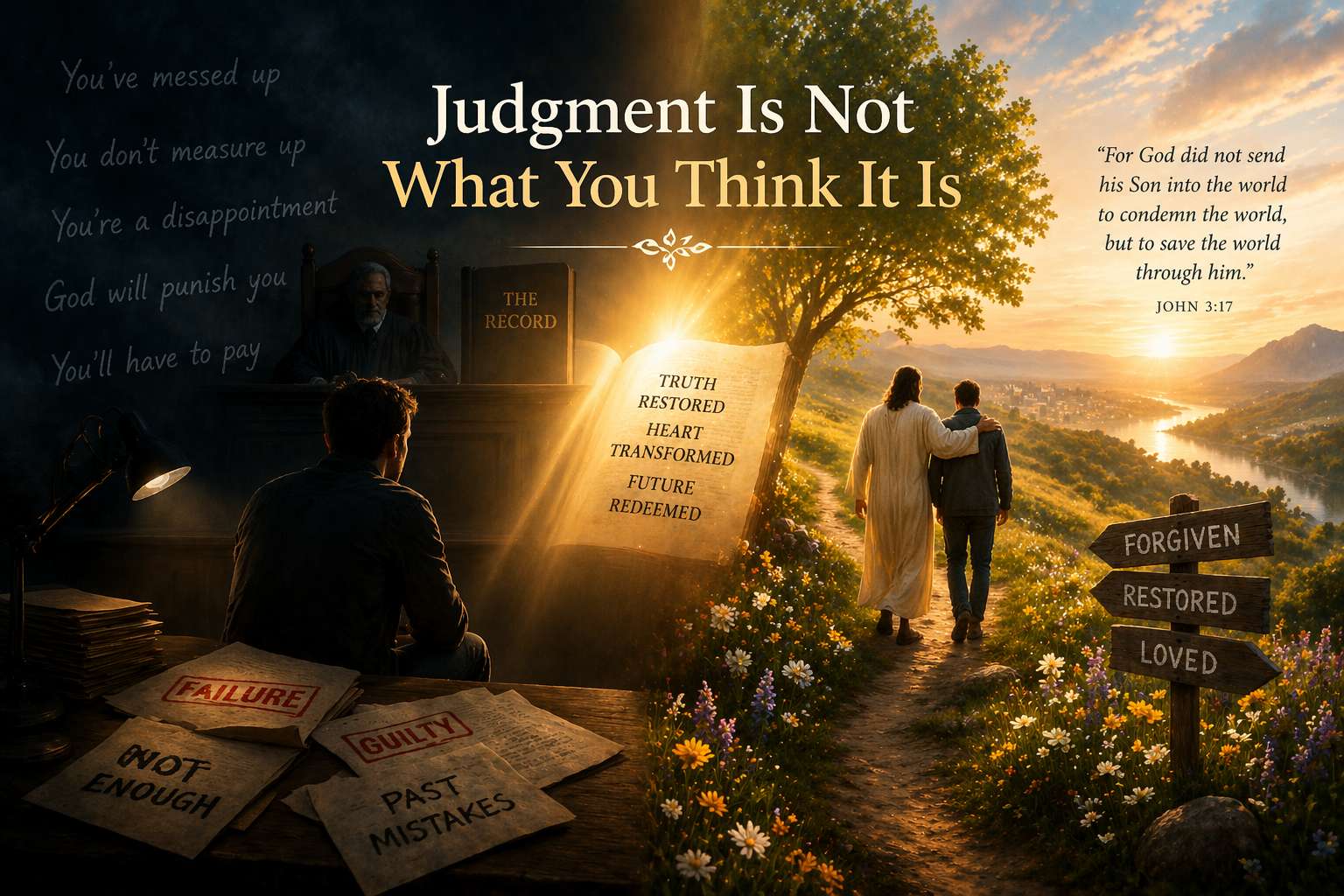
Judgment Is Not What You Think It Is

It All Begins Here

Few words in theology carry as much emotional weight as the word judgment. For many, it evokes images of final separation, eternal punishment, and a God whose primary role is to evaluate, divide, and condemn. This understanding has shaped not only belief systems, but entire emotional worlds—fueling fear, anxiety, and often a deep sense of insecurity about one’s standing before God.

But what if judgment has been fundamentally misunderstood?

The Primitive Baptist Universalist tradition invites us to reconsider judgment—not by dismissing it, but by redefining it. Judgment is not the mechanism by which God distances Himself from humanity. It is the process through which truth is revealed.

At its root, judgment is about clarity.

In Scripture, the language of judgment is often tied to light, revelation, and unveiling. Things hidden are brought into the open. What is false is exposed. What is true becomes unmistakable. This is not primarily a legal process—it is an existential one.

From a theological perspective, if God is already present and humanity already exists within that presence, then judgment cannot be about determining who gets in and who is kept out. There is no outside. Instead, judgment must be understood as the moment when human perception comes into contact with reality.

And that contact can be uncomfortable.

From a psychological standpoint, we know that human beings construct meaning in ways that protect us. We develop beliefs, narratives, and identities that help us make sense of the world—even when those constructions are incomplete or distorted. When those constructions are challenged, the experience can feel like loss, disorientation, or even threat.

This is why judgment is often experienced as painful. Not because God is inflicting harm, but because illusion is being dismantled.

Consider how this plays out in everyday life. When a person becomes aware of something they have avoided—whether about themselves, a relationship, or a pattern of behavior—the initial experience is rarely pleasant. It can feel like exposure. But that exposure is also the beginning of transformation. Without it, nothing changes.

Judgment functions in a similar way.

It is the process through which:

  • Self-deception is confronted

  • Harmful patterns are revealed

  • False beliefs are brought into question

  • Reality becomes clearer

This is not retribution. It is restoration.

This reframing also changes how we understand accountability. If judgment is not about external punishment, then it is not something that can be avoided through performance, affiliation, or belief alone. It is not a system to be navigated—it is a reality to be encountered.

We do not escape judgment. We undergo it.

And in undergoing it, we are not being destroyed—we are being brought into alignment with what is true.

This is why fear-based approaches to judgment ultimately fall short. Fear may produce temporary compliance, but it does not lead to clarity. In fact, it often reinforces avoidance, keeping individuals from engaging honestly with themselves and their lives.

A restorative understanding of judgment does the opposite. It invites honesty. It encourages self-examination. It creates the conditions for growth.

It also reshapes how we view God.

God is not positioned as an adversary waiting to condemn, but as the ground of truth itself—the one in whose presence all things are brought into clarity. Judgment, then, is not something God does to us. It is something that happens in the presence of God.

For those who have lived under the weight of fear-based religion, this shift can be difficult to accept. Fear provides a kind of certainty. It draws clear lines and offers simple categories. But it also distorts the nature of both God and humanity.

The Primitive Baptist Universalist tradition offers a different vision:

Judgment is real.
It is necessary.
But it is not what you have been told.

It is not the end of hope.
It is the beginning of truth.

And where truth is allowed to emerge, restoration is not only possible—it is inevitable.

Read More